Rosendo Mendizábal: The Afro-Argentine Pianist Who Wrote Tango’s First Sheet Music
7 min read | Best enjoyed with a glass of wine and Guardia Vieja playing
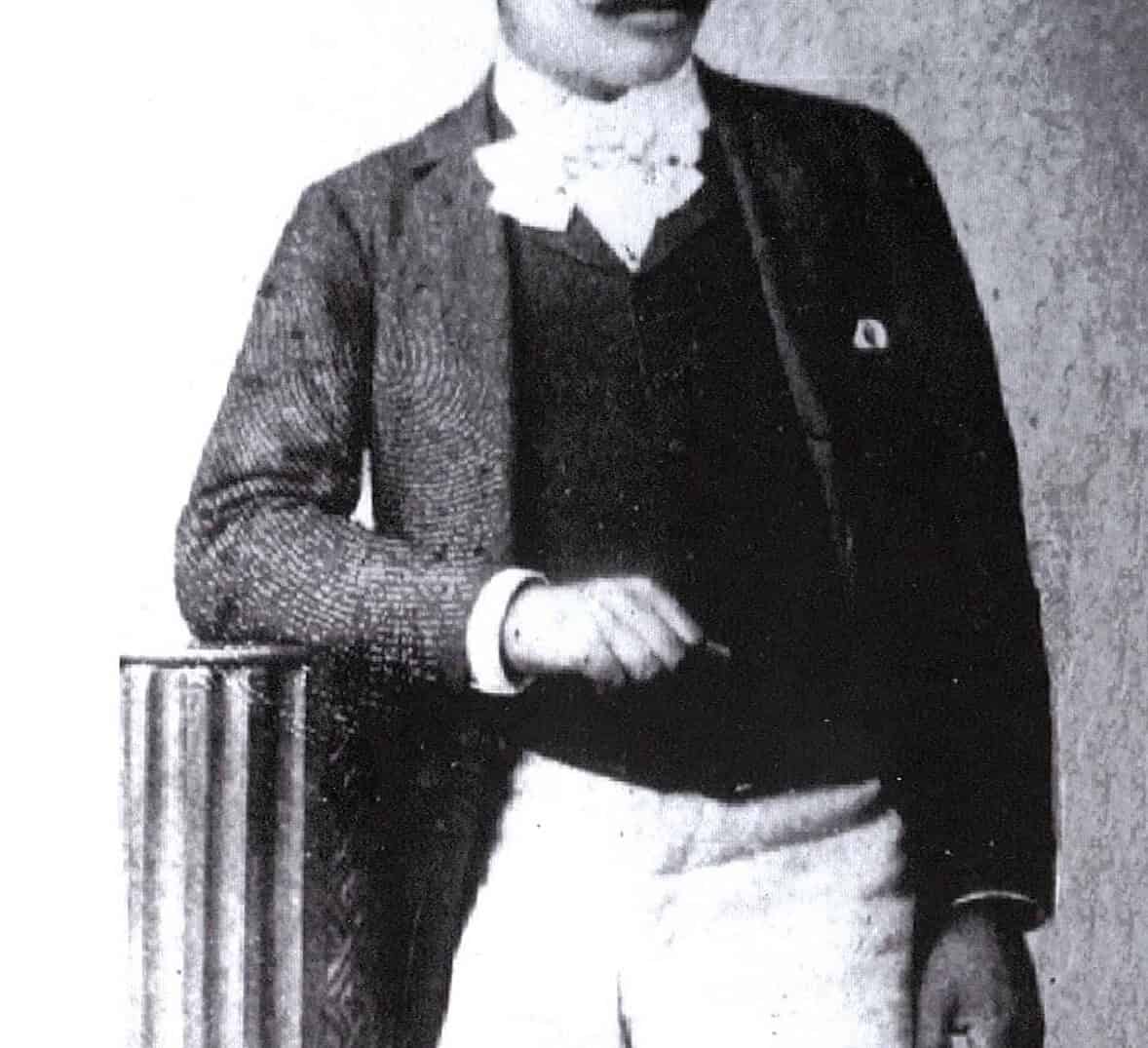
Buenos Aires, 1868. A boy is born into an Afro-Argentine family with money—enough money that when he turns seven and inherits it all, he’ll have the world at his feet. His name is Rosendo Mendizábal, and he’s going to write what many historians consider the very first notated tango.
But here’s the thing about Rosendo : he burned through every peso of that inheritance. He played piano in dive bars that smelled like cigarette smoke and cheap wine. He played in fancy academies where wealthy porteños practiced their steps. And somewhere in between all that, Rosendo Mendizábal created “El entrerriano”—a tango that dancers still move to at milongas today.
This is his story.
The Inheritance That Changed Everything (And Then Disappeared)
Picture this: you’re seven years old and suddenly you’ve got more money than most adults will see in a lifetime. For young Rosendo Mendizábal , that inheritance meant one thing—music lessons. Lots of them.
He didn’t just learn to play piano. He mastered it. Got so good they gave him a teaching position at a conservatory. People talked about his left hand—the way he used it was different from anyone else. Unique. You could hear a Mendizábal piece and know it was his.
But money? Money came and went. He spent it all. Every last peso.
So he did what musicians do when they’re broke: he played anywhere that would have him.
The Z Club: Where Tango Was Still a Secret
Once a month, Mendizábal played for about 40 friends at a place called the Z Club. No random walk-ins. No strangers. Just a tight circle of guys who wanted to hear new tangos before anyone else did.
Back then, there were no copyright laws. Zero. So if you wrote something new, you’d dedicate it to whoever was paying for the drinks—or whoever you wanted to impress.
“El entrerriano” got dedicated to Ricardo Segovia, a club member born in Entre Ríos province. Was it genuine admiration? A strategic move? Who knows. What matters is that the tango stuck around long after both men were gone.
Want to know more about the early tango scene? Check out our deep dive into the Guardia Vieja era and what made it so different from modern tango.
Life as a Working Pianist: From Seedy Bars to Dance Academies
After the money ran out, Mendizábal hustled. He played in rough neighborhoods where fights broke out and nobody cared if you hit a wrong note. He also played in upscale dance academies where wealthy families sent their daughters to learn proper footwork.
Some people called him the finest pianist of the Guardia Vieja period. Others just knew him as the guy who could make a piano sound like it was telling a story.
His most famous piece, “El entrerriano,” was written somewhere between 1897 and 1898. Most historians agree it’s the first tango anyone bothered to write down in sheet music form. Before that? Tangos were just passed around by ear, changing a little every time someone played them.
Mendizábal’s health fell apart later in life. Near-blindness. Chronic illness. He died on June 30, 1913, in Buenos Aires—the same city where he was born 45 years earlier.
Musical Innovation That Changed Tango Forever
Rosendo Mendizábal didn’t just write tangos. He gave the genre its structure. Before his 1897 composition “El entrerriano,” most tangos were improvised. They had one or two sections. Musicians passed them around by ear. The tunes changed with each performance.
Mendizábal introduced a three-part structure. Two 16-measure sections bookended a 32-measure middle section. This became the blueprint for tango composition. It lasted for decades.
His piano technique was special. He was known for his unique use of the left hand. Born into a middle-class family with formal training, he taught piano to wealthy daughters. He also played at upscale brothels. This gave him access to two worlds: the conservatory and the cabaret.
His composition “El Club Z” shows his style. It features an instrumental call-and-response pattern over a habanera rhythm. This technique influenced how orchestras arranged tango for years. When performing live, he sometimes directed a quintet. It included violin, flute, guitar, and other instruments. He was experimenting with ensemble sounds that would later become standard.
Dancers noticed immediately. When “El entrerriano” premiered, dancer José Guidobono reportedly froze mid-step. The melody’s liveliness mesmerized him. This shows what Mendizábal understood: tango wasn’t just music. It was a physical conversation between sound and movement.
Later composers recognized his contribution. Sebastián Piana was a heavyweight in tango’s golden age. He admired the modernity in Mendizábal’s works. Many of his compositions have disappeared from the repertoire. But the survivors still get played at traditional milongas worldwide. “El entrerriano,” “México,” and “Matilde” remain favorites.
Musicologists call Mendizábal “the first tango musician of note.” Not because he invented tango. But because he was the first to write it down properly. His notation could be reproduced. It could be studied. Others could build upon it.
Golden Age orchestras recorded his work. Francisco Canaro did versions in 1929 and 1952. Osvaldo Fresedo recorded it in 1927. Juan D’Arienzo’s 1946 and 1954 recordings are legendary. Osvaldo Pugliese also recorded it. Each interpretation added new layers. But they all respected the original architecture Mendizábal created.
Listen to Mendizábal’s Legacy
Most Popular Recording:
Juan D’Arienzo’s version of “El entrerriano” (1946) is the most played at milongas today. It’s energetic and perfect for dancing.
🎵 Listen: Juan D’Arienzo – “El entrerriano” on Spotify
Other Great Versions:
- Francisco Canaro – “El Entrerriano” (1958)
- Osvaldo Pugliese – “El Entrerriano” (1997)
- Osvaldo Fresedo – “El Entrerriano” (1927/2014 remaster)
Full Guardia Vieja Playlist:
🎼 Tangos De La Guardia Vieja – Various Artists (13 classic tracks including works by Mendizábal and his contemporaries)
Rosendo Mendizábal: Best Tangos (The Ones Dancers Still Love)
If you spend time at milongas, you’ve probably danced to at least one of these. Here are Mendizábal’s greatest hits, ranked by the ones that get the most floor time today:
1. “El entrerriano” (1897-1898)
This is the big one. The tango that started it all. It’s got that timeless quality—somehow feels both vintage and modern at the same time. If you’ve never danced to it, you’re missing out.
🎵 Listen to “El entrerriano” on Spotify | 🕺 Find milongas playing this classic
2. “México”
Not sure why Rosendo Mendizábal named it after another country, but it works. “México” has this pull to it—like the music is gently dragging you across the floor whether you planned to dance or not.
3. “Matilde”
A personal favorite for dancers who like melodic tangos. It’s softer than “El entrerriano” but still has enough drive to keep you moving.
4. “El torpedero”
“The Torpedo.” Yeah, it’s as energetic as it sounds. Good luck sitting this one out if it comes on.
5. “Contraflor al resto”
Weird name. Great tango. This one has a distinctive style—you can hear Mendizábal experimenting with rhythm and phrasing here.
6. “Tres arroyos”
Three streams. This tango flows. It’s emotional without being heavy, which is harder to pull off than it sounds.
7. “Don Santiago”
Elegant. That’s the word for this one. It’s the kind of tango you’d hear at a fancy Buenos Aires salon in the 1900s—and it still holds up.
8. “Tigre hotel”
Atmospheric. You can almost picture the scene Mendizábal had in mind when he wrote this—probably some riverside hotel where couples danced till sunrise.
9. “Don José María”
Melodic and memorable. Another example of Rosendo Mendizábal ‘s ability to write tunes that stick with you long after the music stops.
10. “Viento en popa”
“Wind at your back.” This tango has momentum. It’s rhythmic, dynamic, and still gets played at traditional milongas around the world.
Note: Some of these tangos don’t have detailed recording info because, well, they’re from the 1890s. But you can still find modern orchestras playing them—check our guide to tango orchestras for recommendations.
Why Sebastián Piana (And Others) Still Care About Mendizábal
Sebastián Piana, another heavyweight in tango history, once said Mendizábal’s work had a modernity to it that most people missed. Unfortunately, a lot of Mendizábal’s compositions have been forgotten.
But the ones that survived? Dancers love them.
If you go to a traditional milonga—especially one that plays Guardia Vieja tandas—you’ll hear “El entrerriano” or “México” at some point in the night. That’s Mendizábal’s legacy: music that never left the dance floor.
Curious about other Guardia Vieja composers? Explore our profiles of tango legends from the 1890s-1920s.
FAQ: What People Ask About Rosendo Mendizábal
Why is Mendizábal important in tango history?
Because he was one of the first composers to write tango down in sheet music form. Before him, tangos were mostly improvised or passed around by memory. “El entrerriano” is considered the first notated tango, which is a big deal if you care about how music evolves.
How did he end up broke if he inherited so much money?
Good question. He spent it. All of it. Then he made a living playing piano in bars, dance halls, and private clubs. Not the most stable career, but it kept him going.
What happened to him later in life?
He got sick. Lost most of his vision. Died at 45 in Buenos Aires. Not a happy ending, but his music outlasted him by over a century.
Why do dancers still play his music today?
Because it’s good. His compositions have this timeless quality—they work in modern milongas just as well as they did in 1900. Plus, there’s something about dancing to the same tango that people danced to 120+ years ago. It connects you to the history of the dance in a way that’s hard to describe until you feel it.
Keep Exploring Tango’s Roots
Mendizábal’s tangos are still alive because dancers keep playing them, orchestras keep recording them, and people keep showing up to milongas. If you want to go deeper into tango history, here are some rabbit holes worth falling into:
🎵 Complete Guardia Vieja Playlist – Spotify
🗓️ Find Milongas Near You – TangoFestivals.net
📖 Lunfardo Dictionary for Tango Dancers
🎭 More Tango Legends: Miguel Caló, Julio Sosa, and Others
Sources:
- “Rosendo Mendizábal” by Marinha Villalobos (2010)
- “Mujeres y hombres que hicieron el tango” by José Gobello, p. 167. Buenos Aires. Centro Editor de Cultura Argentina. ISBN 950-898-081-8.
- “El tango” by Horacio Salas, p. 94. Buenos Aires. Editorial Planeta Argentina S.A. ISBN 950-37-0219-4.
💬 Which Mendizábal tango is your favorite to dance to? Drop a comment or share this article with your tango crew.