Embracing the Essence of Carlos Gardel: A Journey into Tango Mastery
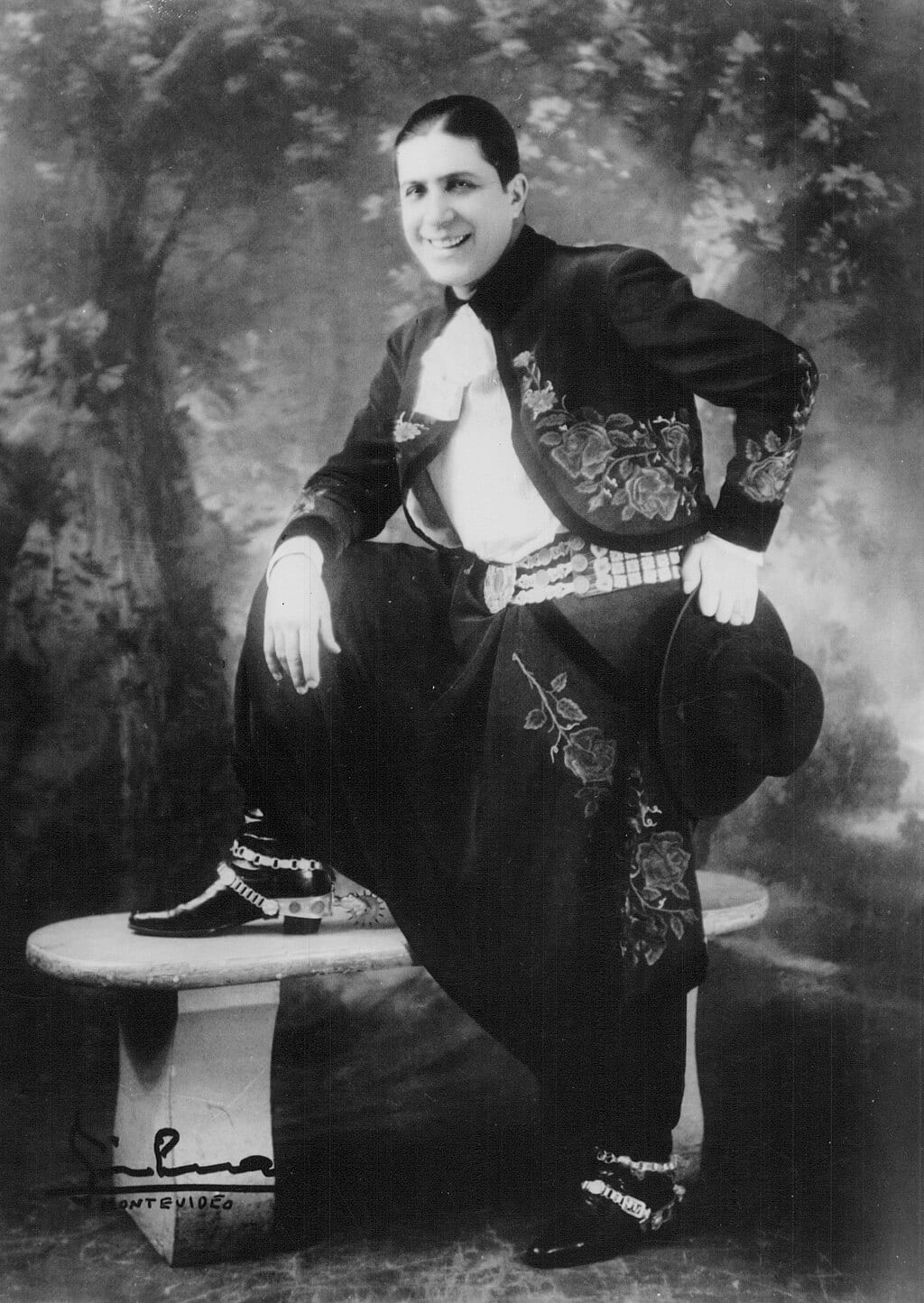
Carlos Gardel, born on December 11, 1890, in Toulouse, France, and raised in Buenos Aires, Argentina, is renowned as one of the most iconic figures in the world of tango. Though his birthplace is a subject of debate, Gardel’s musical journey is undeniably rooted in the vibrant streets of Buenos Aires.
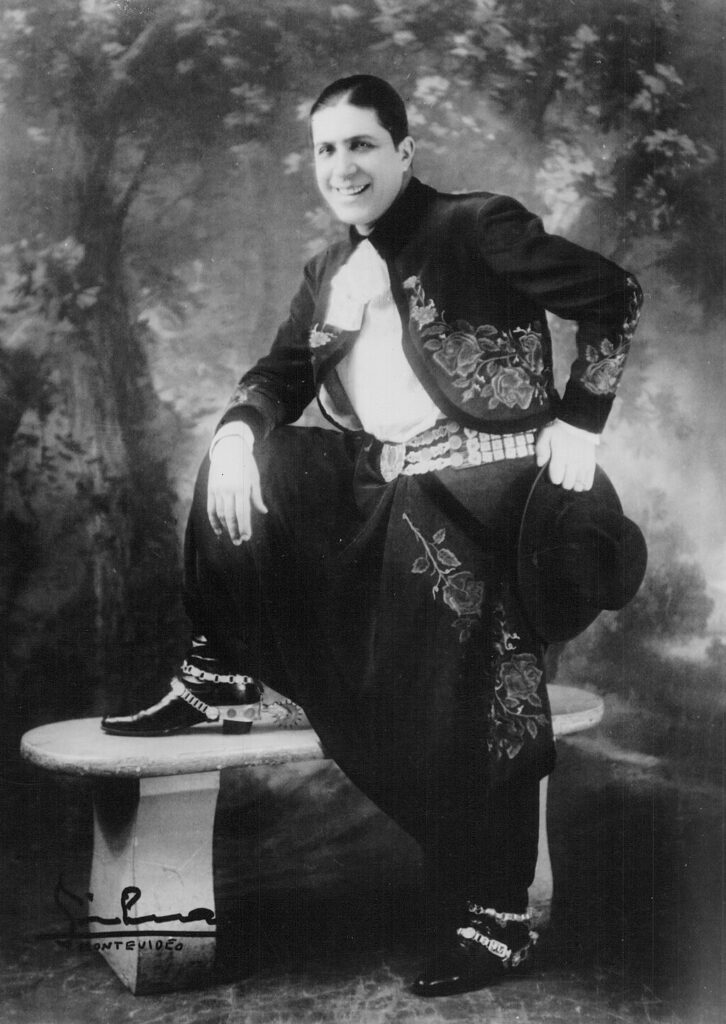
Berta Gardès influence to Carlos Gardel
Carlos Gardel‘s mother was Berta Gardès. She was born on August 15, 1863, in Montevideo, Uruguay. Her family name was originally Gardès, reflecting her French ancestry, but she later adopted the Spanish-sounding version, Gardel. Berthe Gardès played a significant role in Carlos Gardel’s upbringing. She was a central figure in his early years and family life.
Berthe Gardès’s French heritage adds an interesting aspect to Carlos Gardel’s background, contributing to the cultural diversity that influenced his life and music.
The life of Berthe Gardès is intertwined with the enigmatic and fascinating story of Carlos Gardel, the iconic figure in the history of tango. The mystery surrounding Gardel’s birth and his upbringing adds to the allure of his legacy.
Berthe Gardès passed away on December 6, 1893, when Carlos Gardel was still a child.
Early Musical Pursuits
Gardel’s passion for music ignited at a young age, and by his teens, he was already performing in local bars and cafes. His smooth voice and emotional delivery captivated audiences, setting the stage for a remarkable career in the world of tango.
Rise to Stardom
The 1920s marked Gardel’s ascent to stardom. His partnership with lyricist Alfredo Le Pera proved to be a musical alchemy that produced some of the most enduring tango classics. Songs like “El día que me quieras” and “Mi Buenos Aires querido” became anthems, earning Gardel widespread acclaim.
International Success
Gardel’s appeal transcended borders. He toured extensively in Latin America, Europe, and the United States, introducing the world to the seductive rhythms of tango. His deep baritone voice and charismatic stage presence made him a global sensation, and he became the face of Argentine tango on the international stage.
Cinematic Legacy
In addition to his musical career, Gardel made a significant impact in cinema. His magnetic presence graced numerous films, including classics like “El día que me quieras” (1935) and “Tango Bar” (1935). These films not only showcased his acting abilities but also immortalized his songs on the silver screen.
Top 10 Timeless Tango Songs of Carlos Gardel
Carlos Gardel‘s soulful voice and poetic lyrics have left an indelible mark on the world of tango. Here are ten of his most important and enduring tango classics that continue to enchant dancers and music lovers worldwide:
- “El día que me quieras” (The Day You Love Me)
- Year of Release: 1935
- Details: An immortal classic, this song is a pinnacle of Gardel’s artistry, combining beautiful melodies with heartfelt lyrics. It remains a staple in the repertoire of every tango enthusiast.
- “Por una cabeza” (By a Head)
- Year of Release: 1935
- Details: Widely recognized from its inclusion in various films and TV shows, “Por una cabeza” is a masterpiece that captures the essence of Gardel’s romantic and melodic tango style.
- “Mi Buenos Aires querido” (My Beloved Buenos Aires)
- Year of Release: 1934
- Details: A love letter to his hometown, this song expresses Gardel’s deep affection for Buenos Aires. Its evocative lyrics and nostalgic melody make it an anthem for the city.
- “Cuesta abajo” (Downhill)
- Year of Release: 1934
- Details: A melancholic and emotive tango, “Cuesta abajo” showcases Gardel’s ability to convey profound emotions through his music. Its haunting melody and poignant lyrics have made it a classic.
- “La cumparsita” (The Little Carnival Parade)
- Year of Release: 1934
- Details: Although not originally composed by Gardel, his interpretation of this iconic tango is legendary. “La cumparsita” is a must-listen, showcasing Gardel’s unique vocal style.
- “Mano a mano” (Hand in Hand)
- Year of Release: 1934
- Details: This tango tells a story of urban struggles and resilience. Gardel’s emotive delivery adds depth to the narrative, making “Mano a mano” a timeless representation of the genre.
- “Sus ojos se cerraron” (Her Eyes Closed)
- Year of Release: 1937
- Details: A poignant and soul-stirring tango, “Sus ojos se cerraron” reflects Gardel’s mastery in conveying profound emotions through music. The lyrics and melody create a hauntingly beautiful composition.
- “Volver” (Return)
- Year of Release: 1935
- Details: “Volver” is a heartfelt reflection on the theme of returning, both physically and emotionally. Gardel’s emotional rendition has made this tango a timeless classic.
- “El choclo” (The Corn Cob)
- Year of Release: 1933
- Details: Gardel’s interpretation of this tango, composed by Ángel Villoldo, adds a layer of emotion and sophistication. “El choclo” is celebrated for its lively rhythm and captivating melody.
- “Amores de estudiante” (Student Loves)
- Year of Release: 1934
- Details: This tango captures the essence of youthful love and passion. Gardel’s velvety voice and the evocative lyrics make “Amores de estudiante” a quintessential example of his artistry.
These ten tango masterpieces by Carlos Gardel stand as a testament to his enduring legacy in the world of music. Each song encapsulates the essence of Argentine tango, making them essential listens for anyone seeking to immerse themselves in the soul-stirring world of Gardel’s art.
Frequently Asked Questions about Carlos Gardel
What are Carlos Gardel’s most famous songs?
Some of Carlos Gardel’s most famous songs include “El día que me quieras,” “Por una cabeza,” “Mi Buenos Aires Querido,” “Cuesta Abajo,” “La Cumparsita,” “Mano a Mano,” “Sus ojos se Cerraron,” “Volver,” “El Choclo,” and “Amores de Estudiante.”
When did Carlos Gardel pass away?
Carlos Gardel tragically lost his life in a plane crash on June 24, 1935, in Medellín, Colombia.
What is Gardel’s legacy in the world of tango?
Gardel’s legacy is deeply intertwined with tango’s history. His impact is still felt globally, and he has been posthumously inducted into the International Latin Music Hall of Fame (2000) and the Latin Songwriters Hall of Fame (2014).
Where are the Carlos Gardel Museums located?
There are two Carlos Gardel Museums – one in Abasto, Buenos Aires (opened in 2003), located in the house Gardel bought for his mother, and another in Valle Edén, Uruguay (opened in 1999), situated 23 km south of Tacuarembó.
What is the significance of the phrase “Gardel sings better every day”?
This saying, popular in Argentina, reflects the enduring popularity and admiration for Gardel’s singing prowess, suggesting that his talent only grows with time.
Are there any fictional portrayals of Carlos Gardel?
Yes, Gardel has been portrayed in fiction, including the play “El día que me quieras” (1979) by José Ignacio Cabrujas and the biopic “The Life of Carlos Gardel” (1939) where he is played by Hugo del Carril.
What is the story behind the stamp tributes to Gardel?
Various countries, including Argentina, Uruguay, Colombia, and the United States, have issued postal stamps as a tribute to Carlos Gardel, commemorating his impact on music and culture.
Are there any other museums related to Carlos Gardel?
Apart from the Carlos Gardel Museums, there is also a small house museum called Casa Gardeliana in Medellín.
What is the phrase “Twenty years is nothing” associated with Carlos Gardel?
This phrase comes from Gardel’s song “Volver” (1934) and is widely used in Argentina and some Latin American countries, emphasizing the idea that time has not diminished the significance of certain experiences.
Notable Sources
- History Today: The Tango Made Flesh: Carlos Gardel.
- PlanetadeLibros: Gardel – Felipe Pigna.
- Proyecto: Carlos Gardel, among the most prominent and influential Argentines of the 20th century worldwide.
- BBC News: Argentina and Uruguay’s tango row.
- Todotango.com: Biography of Hugo Del Carril by Gaspar Astarita.
- Sounds and Colours: Carlos Gardel: The King of Tango.